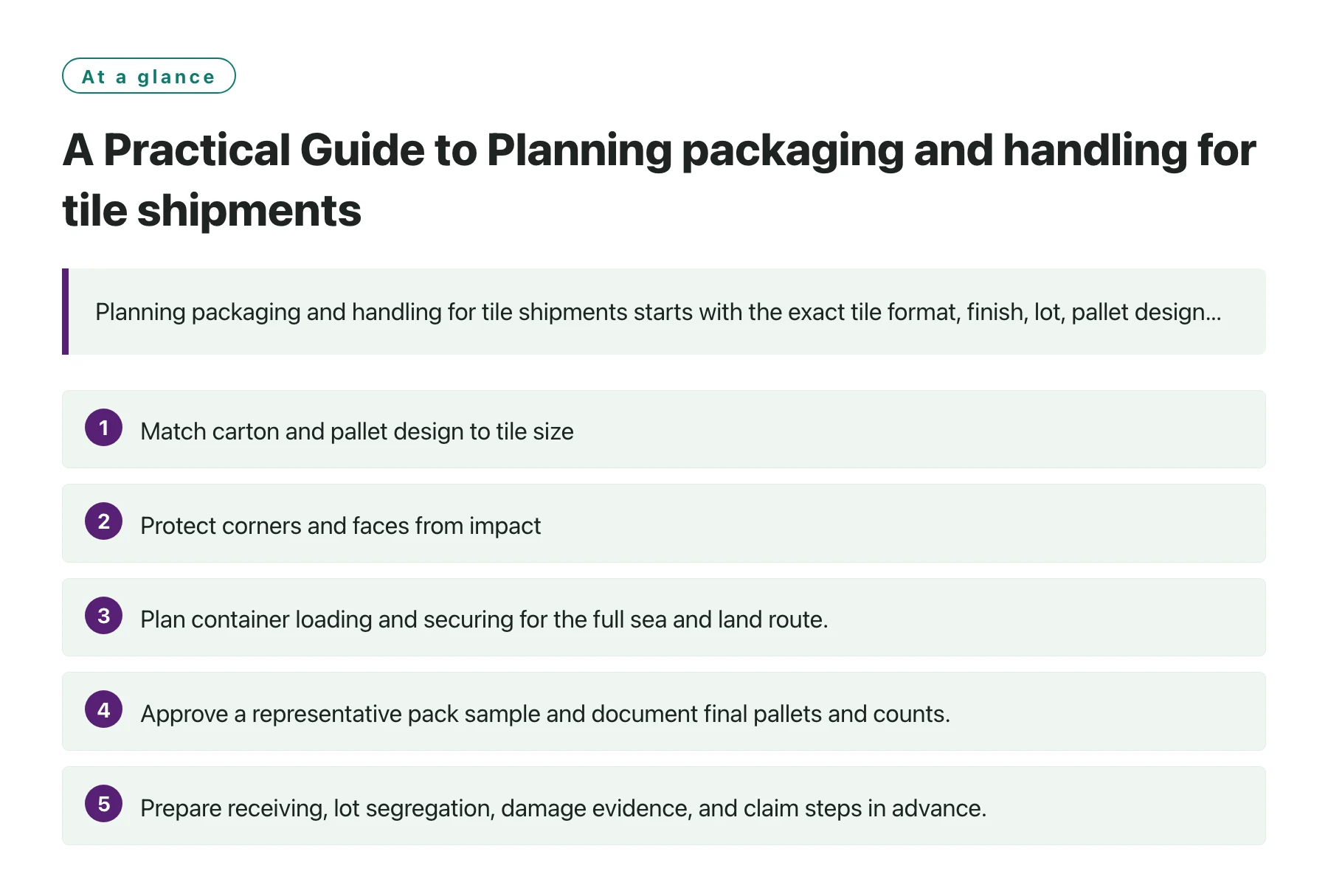
Planning packaging and handling for tile shipments starts with the exact tile format, finish, lot, pallet design, route, and destination equipment. Buyers should protect faces and edges, stabilize pallets and containers, approve a representative packaging setup, and connect final carton labels and counts to import and receiving records. A defined damage process helps locate where a problem occurred and keeps affected lots identifiable.
Key takeaways
- Match carton and pallet design to tile size, finish, weight, and handling method.
- Protect corners and faces from impact, abrasion, moisture, and compression.
- Plan container loading and securing for the full sea and land route.
- Approve a representative pack sample and document final pallets and counts.
- Prepare receiving, lot segregation, damage evidence, and claim steps in advance.
Tile shipment risk continues after production inspection. Packaging, pallet stability, container loading, and receiving procedures all affect whether the selected product arrives intact and traceable.
Define the tile and shipment before choosing packaging
Start with the exact tile type, format, thickness, finish, edge, quantity, and intended use. Large-format slabs, small mosaics, polished surfaces, and trim pieces have different breakage and abrasion risks. Record the manufacturer’s product code, shade and caliber where used, and the approved sample or production reference. Packaging designed around a smaller or heavier tile may not protect a revised order.
Confirm how tiles are grouped into cartons and pallets. State units per box, coverage per box, carton identifier, lot or production run, and any mixed shade or size. The packing list should let the receiving team identify what each pallet contains without opening everything. Ask the supplier to reconcile counts after final packing, not only from the planned production quantity.
Calculate gross weight and dimensions from the actual packing design. Check pallet limits, container loading capacity, forklift access, warehouse racking, and delivery equipment. Include protective materials and pallet tare in weight records. If an import broker needs accurate product descriptions or packaging data, assign who prepares and reviews those details.
Protect faces, edges, and corners
Ceramic tile can arrive with chipped corners, cracked edges, scuffed glaze, or broken pieces even when the outer pallet looks intact. Specify separators or face protection, corner guards, carton strength, and wrapping suited to the tile finish. Avoid packaging materials that can abrade polished surfaces or leave adhesive residue during a hot or humid route.
For slabs or long trim, define support points, frame design, restraints, lifting method, and orientation marks. Use packaging that prevents lateral movement and edge impacts during handling. Ask the supplier to document how the unit is moved from production line to pallet and how the crate is lifted without placing stress on unsupported tile edges.
Where moisture protection matters, choose a barrier and ventilation approach that suits the product and route. Keep cartons off wet floors and protect them from rain during staging. Mark handling and storage requirements clearly, but do not rely on a label alone when the container arrangement could crush or shift the pallet.
Design pallet and container arrangements for the route
Confirm pallet dimensions, stackability, maximum stack height, pallet material, wrapping, and whether pallets can be double-stacked. Check that the pallet base can support the tile weight and fit the planned forklift or pallet jack. If palletization changes the quantity per container, update the cost and shipping plan before production is packed.
The IMO/ILO/UNECE CTU Code provides non-mandatory guidance on packing and securing cargo transport units for sea and land transport.[1] Use its principles alongside the actual container, carrier, product, and transport instructions. Plan weight distribution, blocking, bracing, dunnage, and restraint to reduce movement; a general code does not replace a cargo-specific load plan.
Keep heavy packages low and distribute the load according to the container and cargo limits. Separate products that could crush, stain, or contaminate tile cartons. Consider the entire route, including factory loading, terminal handling, transshipment, inland haulage, and warehouse unloading. A pallet stable at the factory may face different forces during later handling.
Set inspection and evidence checkpoints
Before mass packing, approve a packaging sample with the actual tile format and finish. Check carton fit, dividers, edge protection, marks, pallet stability, and handling access. Photograph the approved arrangement and identify its revision. If the supplier changes carton material or pallet design, decide whether another trial is needed.
At final packing, inspect representative cartons and pallets against the approved pack plan. Record sample basis, carton code, quantity, condition, marks, and observed gaps. A limited check should not be reported as inspection of every tile. If fragile or high-value slabs are included, consider a specific handling observation or packaging test suited to the risk.
Ask for clear photographs of each pallet face, labels, corner protection, stretch wrap, and final container stow. Where cartons are opened, record resealing and quantity control. Keep evidence tied to product lot and shipment so a receiving claim can identify which packages were involved.
Plan for receipt, storage, and damage claims
Prepare a receiving checklist before the container arrives. Record seal and container identity, carton count, visible damage, wetness, pallet movement, and lot or shade marks. Photograph damaged areas before cartons are moved or unpacked. Note the time and location because the cause may be factory packing, transit, unloading, or warehouse storage.
Unload with equipment that supports the pallet and avoids dragging cartons. Stage tile on a dry, level surface and keep lots and shade groups organized. Follow the supplier’s storage instructions and the project’s installation sequence. Do not mix cartons across shades or calibers before the project team confirms how they should be allocated.
Agree claim and shortage deadlines with the carrier, insurer, supplier, and buyer. Preserve packaging, labels, photographs, delivery records, and count sheets. Separate visible transit damage from concealed damage found during opening and report each under the relevant process. A clear record improves the chance that replacement or credit decisions can be made against the right lot.
Connect packaging approvals to the import order
Include the accepted packaging specification in the purchase order: carton and pallet configuration, protection, labels, stack limits, gross weight, marks, and required shipment photographs. State who approves substitutions and what evidence is needed. If container loading is inspected, align the loading report with the packing list and the final pallet plan.
Ensure commercial documents match the packed goods. Check product description, quantities, package count, dimensions, weight, consignee, and lot references. If final packing differs from the original estimate, issue corrected documents before dispatch and send the current version to the broker and receiving team.
For ceramic tile sourcing and import coordination, buyers may review JS Sourcing ceramic tile imports as one resource. Define whether support includes supplier follow-up, packaging approval, loading supervision, or document checks, and keep technical tile selection and final acceptance with the project’s designated owner.
Sources
Frequently asked questions
What is the most important packaging check for tile shipments?
Confirm the package protects the actual format and finish, keeps edges supported, identifies the product lot and quantity, and remains stable through planned handling and stacking.
Should tile cartons be opened during final inspection?
Only when the inspection scope calls for it. State whether the review checks exterior labels, samples cartons, or verifies all contents, and record any packages opened and resealed.
How can buyers trace damage to a tile shipment?
Retain container and seal details, pallet and carton identifiers, dated photographs, count records, carrier documents, and the location and timing when damage was found.
Why should the packaging sample match the final tile format?
Tile dimensions, thickness, finish, and weight affect carton fit, separators, support, and pallet stability. A sample with different characteristics may not represent the final order.