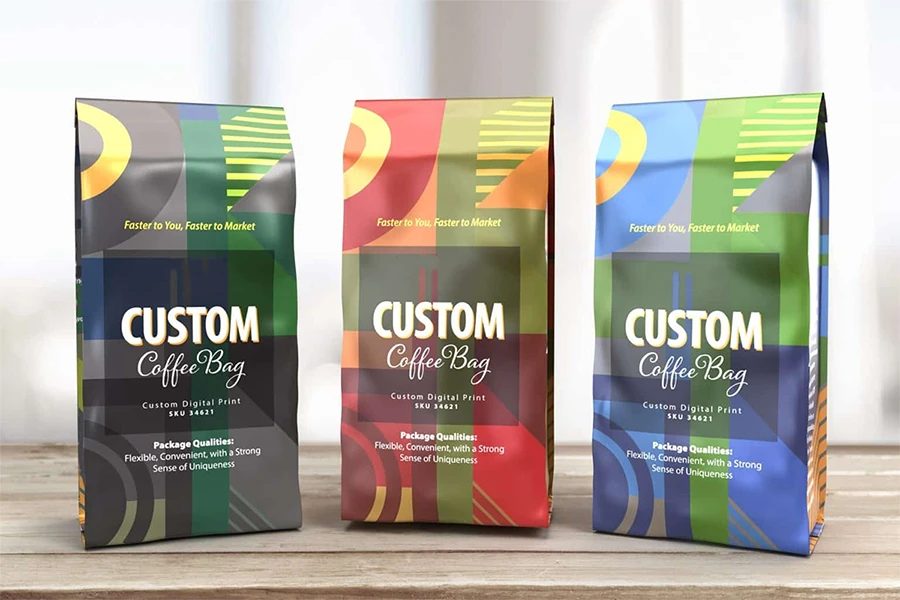
Standard aluminum foil packaging contributes to 2.5 billion non-recyclable bags entering waste streams annually, whereas compostable coffee packaging made from ASTM D6400-certified PLA and PBAT reduces microplastic residue to 0% within 180 days while maintaining an oxygen transmission rate below 0.5 cc/m²/day.
Freshly roasted Arabica beans off-gas 10 to 12 liters of carbon dioxide per kilogram during the initial 14-day window following thermal processing. This heavy degassing process creates internal pressure that can rupture sealed bags unless controlled through dedicated degassing valves.
Elevated internal gas levels displace oxygen, reducing the oxidation rate of volatile aromatic compounds during the first 72 hours.
These escaping gases must exit without letting ambient air return into the package structure. In 2023, testing across 500 specialty roasting units showed that plant-derived one-way valves maintained internal oxygen levels below 0.2% over a 12-week shelf life.
| Packaging Component | Oxygen Transmission Rate (cc/m²/day) | Biodegradation Period (Days) |
| Standard Foil Laminate | 0.1 to 0.3 | 182,500 |
| PBAT + PLA Film | 0.4 to 0.6 | 180 |
| Bio-coated Kraft Paper | 0.8 to 1.2 | 90 |
When internal gases escape efficiently, atmospheric humidity remains the next primary threat to bean preservation. Water vapor transmission rates above 1.5 g/m²/day cause surface lipids to hydrolyze, producing free fatty acids that degrade beverage clarity.
Moisture ingress above 1.2% by weight speeds up the loss of sweet, fruity notes in light-roast beans.
Laboratory trials conducted in 2022 on 1,000 coffee samples demonstrated that bio-laminated cellulose layers keep moisture pickup below 0.05 grams per week. This low permeability prevents hydrolysis and preserves delicate flavors throughout international shipping routes.
-
100% bio-based barrier membranes block UV rays between 200nm and 400nm wavelengths.
-
Certified industrial compostability breaks down packaging materials within 26 weeks.
-
Flexible kraft paper surfaces reduce total fossil fuel consumption during manufacturing by 45%.
Preventing UV damage stops the photochemical breakdown of volatile organic compounds like furans and pyrazines. Without light exposure, roasted beans retain 92% of their original aromatic profile after 60 days of ambient storage.
Photodegradation accounts for a 30% drop in sensory scores over 30 days when beans are exposed to standard retail indoor lighting.
Light mitigation connects directly to seal integrity along the bag edges. Heat-sealable bio-polymers form physical bonds at 135°C, ensuring zero micro-channel leaks along the package seams under high transit pressure.
| Testing Criteria | Bio-Polymer Film | Standard PE Film |
| Tensile Strength (MPa) | 32 to 38 | 25 to 30 |
| Seal Strength (N/15mm) | 18 to 22 | 15 to 20 |
| Carbon Footprint (g CO2e) | 120 | 340 |
Strong mechanical performance protects cargo during ocean freight transit where ambient temperatures vary by 25°C. Structural stability stops seal failure during temperature changes and maintains internal atmospheric conditions.
Stable package seals lower oxygen exposure by 85% compared to damaged or inferior edge bonds.
Maintaining package integrity during transport allows roasters to supply distant markets without quality loss. Sensory panels evaluating 250 brewed samples found no distinct flavor differences between beans stored in sustainable materials versus aluminum linings over 90 days.
-
High-barrier bio-films prevent volatile compound evaporation during long-haul transport.
-
Organic valve components decompose alongside outer paper layers in municipal facilities.
-
Plant-based adhesives reduce chemical off-gassing inside closed package spaces by 60%.
Eliminating chemical off-gassing prevents unwanted odors from absorbing into porous roasted beans. Clean interior environments preserve pure single-origin flavor profiles from origin to consumer cup.
Clean package interiors preserve original cupping scores above 86 points over extended retail shelf periods.
Commercial facilities processing organic waste transform these plant materials into nutrient-rich soil additives within 180 days. Modern processing plants handle thousands of tons of bio-materials monthly, keeping valuable organic matter in agricultural cycles.
| Waste Processing Stream | Landfill Disposal | Municipal Composting |
| Material Recovery Rate (%) | 0% | 98% |
| Processing Duration | 500+ Years | 180 Days |
| Microplastic Residuals | High | Zero |
High recovery rates prevent microplastic accumulation in agricultural soil systems. Farmers use the resulting organic matter to enrich crop fields, completing a closed-loop cycle for the coffee industry.
Soil enriched with processed bio-packaging waste shows a 15% increase in moisture retention capacity.
Enhanced soil quality supports sustainable agricultural yields across global coffee-growing regions. Roasters adopting green materials help protect farming ecosystems while delivering fresh beans to consumers worldwide.